

When & How to Transplant Winter Sown Seedlings (Without Killing Them!)
If you’re anything like me, you’ve been faithfully checking your winter sowing jugs for weeks… maybe even months… just waiting for that first little sign of life. And then one day, there they are. Tiny green sprouts.
It’s the best feeling… followed very quickly by: “Wait… now what do I do with these?”
*As an Amazon Associate, I earn from qualifying purchases. This post contains other affiliate links too for your convenience. Click here to read my full disclosure policy.
One of the most common questions I get this time of year is:
When do I transplant my winter sown seedlings? And how do I do it without killing them? Don’t worry, I’ve got you. Let’s walk through it together, the lazy girl way. And the best part is that I myself am doing this right now too!
When to Transplant Winter Sown Seedlings
Timing is everything here, but don’t overthink it.
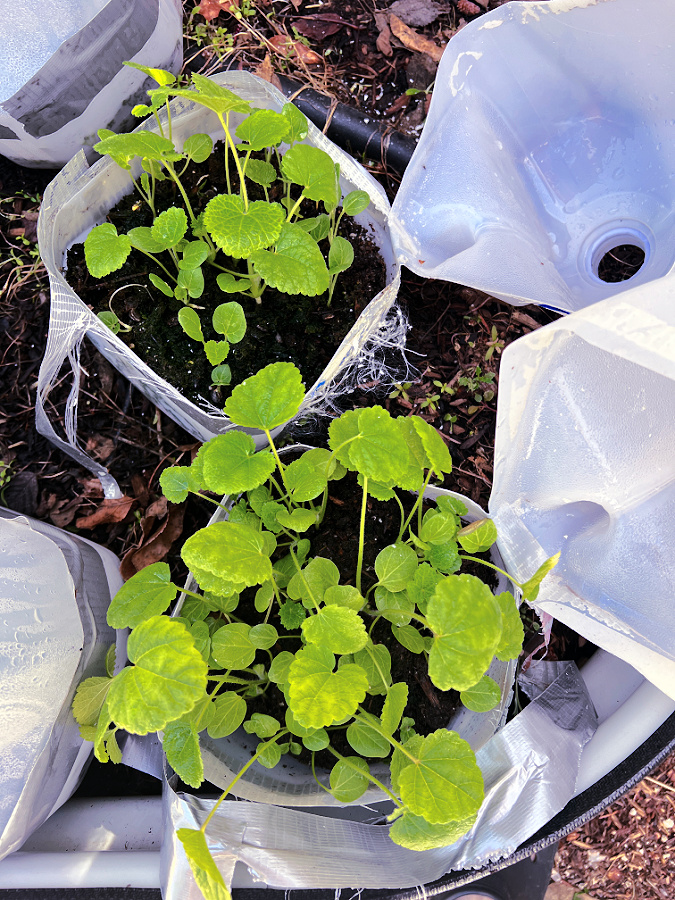
You’re looking for 3 simple signs:
1. They have a few sets of “real leaves”
Not just those first tiny baby leaves (called cotyledons), but at least 2–3 sets of true leaves.
2. They’re starting to outgrow the jug
If things are looking crowded in there, it’s time.
3. The weather is cooperating
This is the big one.
- Hardy flowers (like bachelor buttons, poppies, larkspur):
Can be transplanted earlier, even with light frost - Tender flowers (like zinnias, cosmos, marigolds):
Wait until after your last frost date
For us in Colorado (Zone 5b), that’s usually around mid-May.
If you’re unsure about timing for specific flowers, I break it down in my post all about when to plant seeds and how timing affects your blooms. READ THAT POST HERE!
Lazy Girl Tip:
If you’re not sure, wait a little longer. These seedlings are tougher than you think, but they don’t love being rushed into cold soil.
How to Transplant Winter Sown Seedlings (Step-by-Step)
Don’t worry—this is easier than it sounds.
Step 1: Water your jugs
Before you do anything, make sure the soil is moist.
This helps reduce transplant shock and makes seedlings easier to separate.
If watering has felt confusing at any point, my winter sowing watering guide walks you through exactly what to look for and when to water.
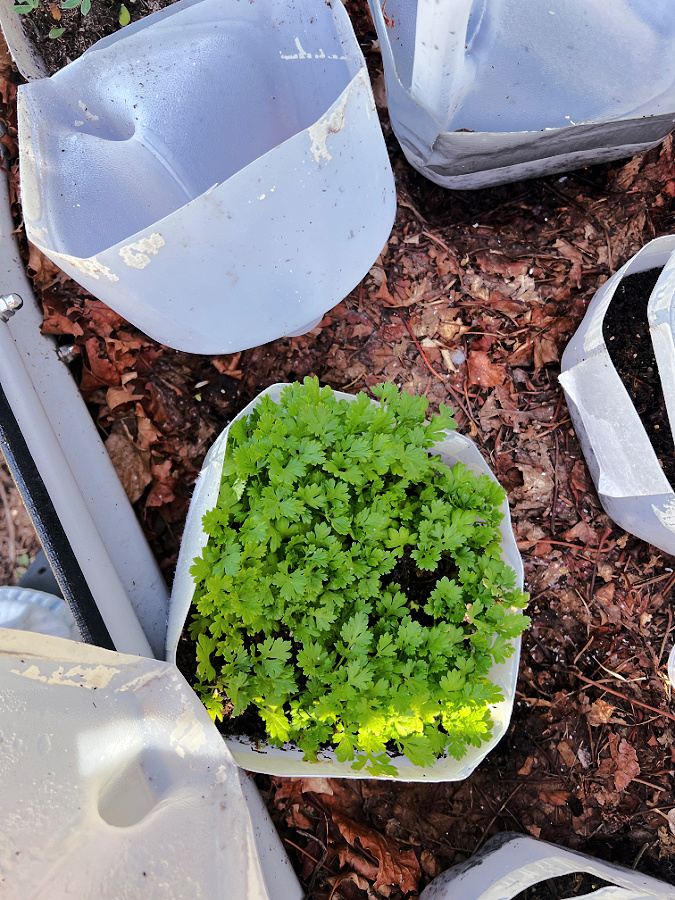
Step 2: Open the jug
Cut or untape your milk jug and gently open it up.
And just take a second here because… you grew these from seed.
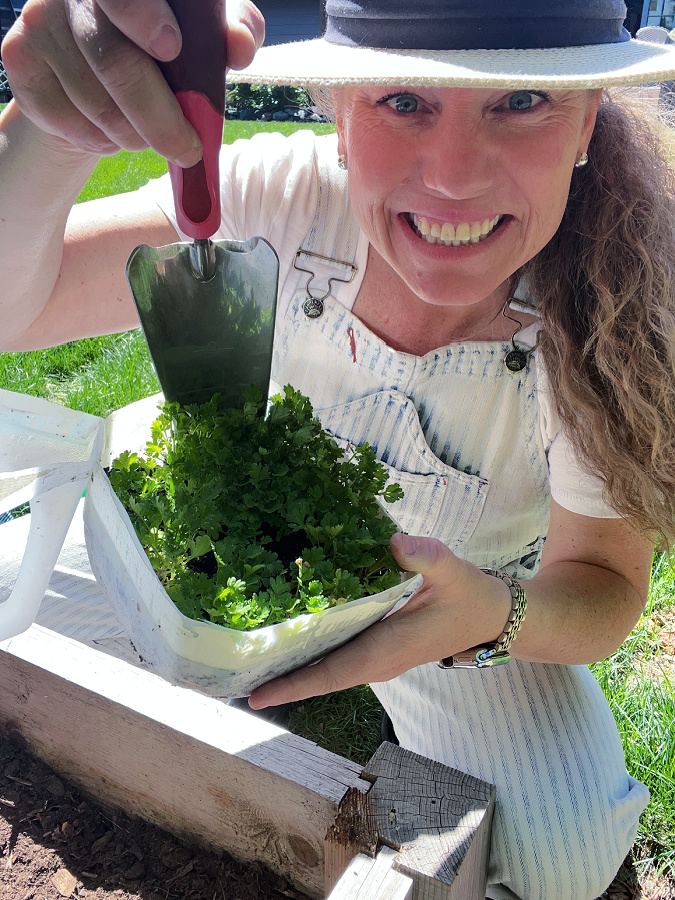
Step 3: Gently separate seedlings
You’ll likely have a little clump of seedlings.
- Use your fingers or a shovel to loosen the sides and to gently tease them apart
- Don’t stress if roots tangle a bit, they’ll recover
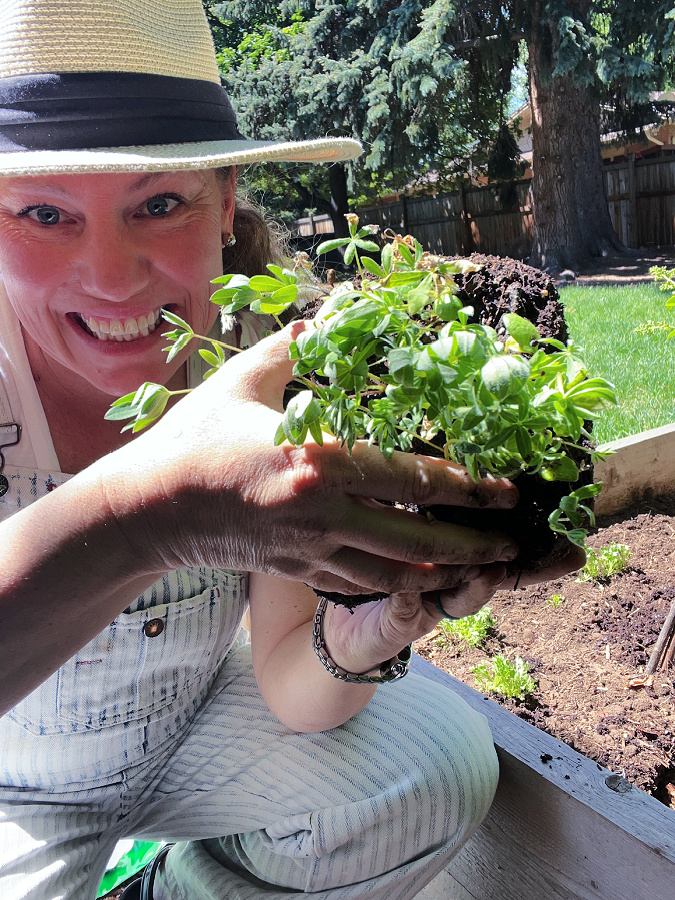
Lazy Girl Tip:
I like to separate certain ones like my sweet peas into small clusters instead of individual plants. Faster and less stress. But some I do leave in large clumps. It really depends on where I am planting them honestly!
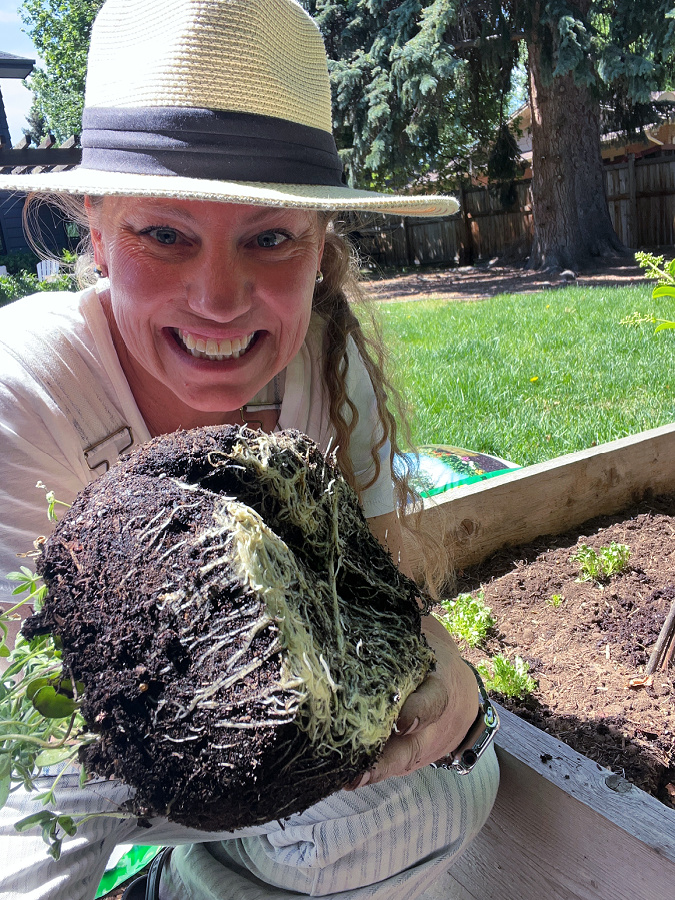
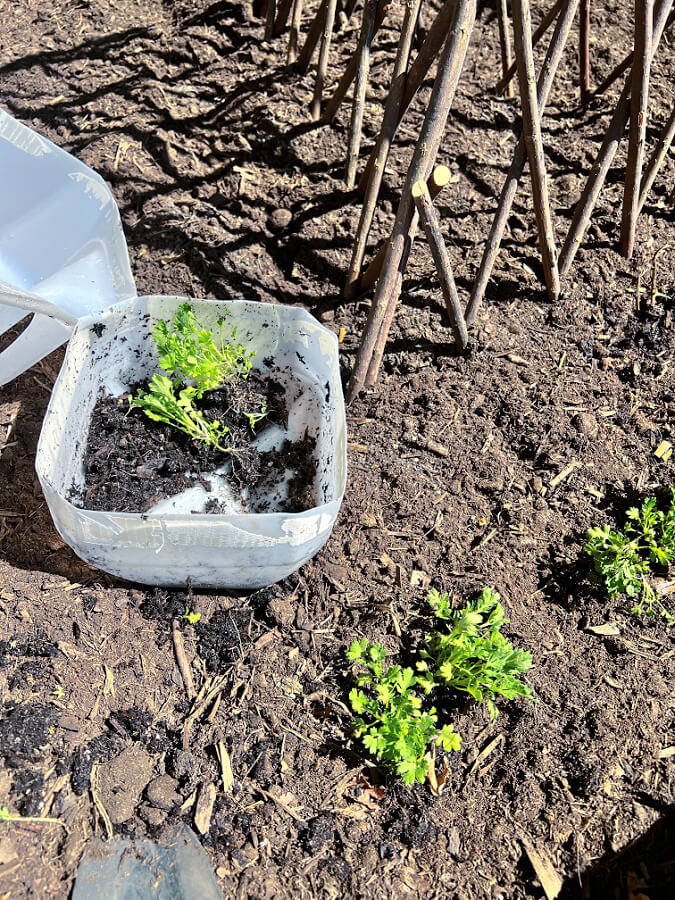
Step 4: Plant directly into the garden (or containers)
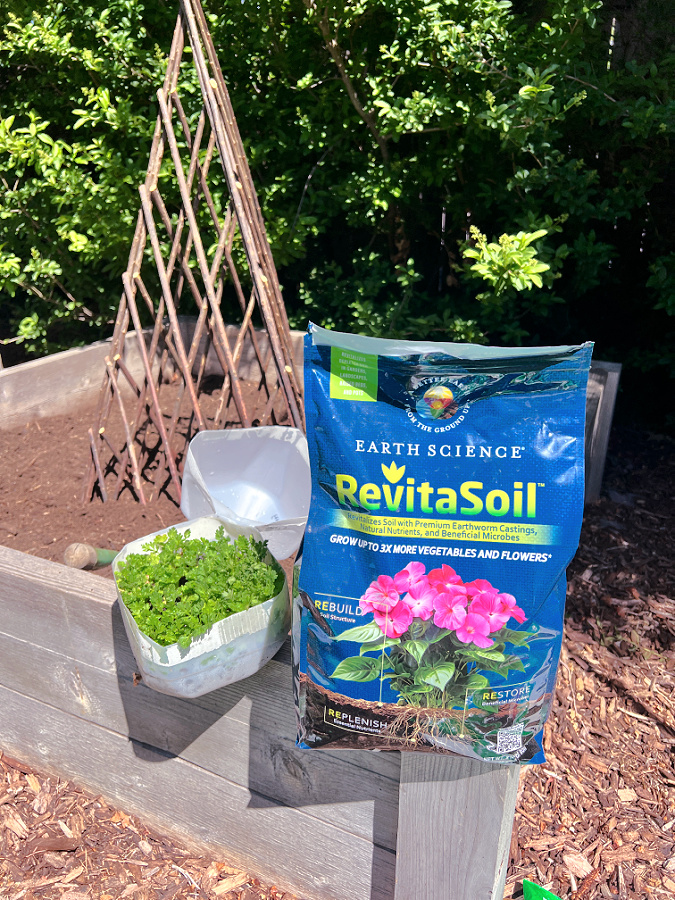
- Amend your soil ( I use this and compost!)
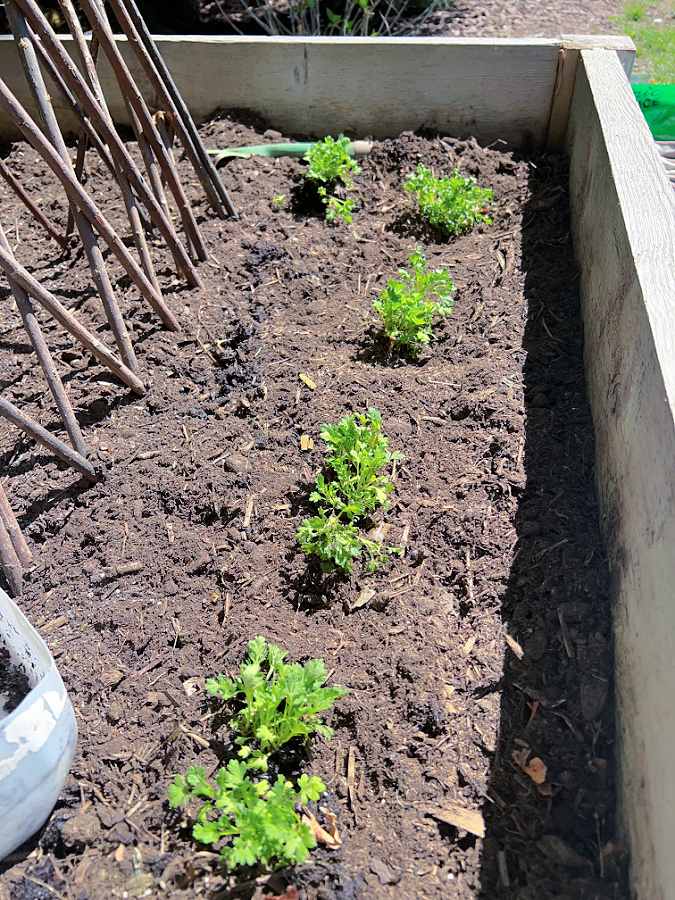
- Dig a small hole
- Place your seedling (or cluster) in
- Gently firm the soil around it
Try to plant at the same depth they were growing in the jug.
Step 5: Water well
Give them a good drink right after planting.
This helps settle the soil and reduce shock.
Step 6: Give them a little grace period
For the first few days:
- Keep soil slightly moist
- Provide light shade if it’s super sunny or windy
- Don’t panic if they look a little droopy at first
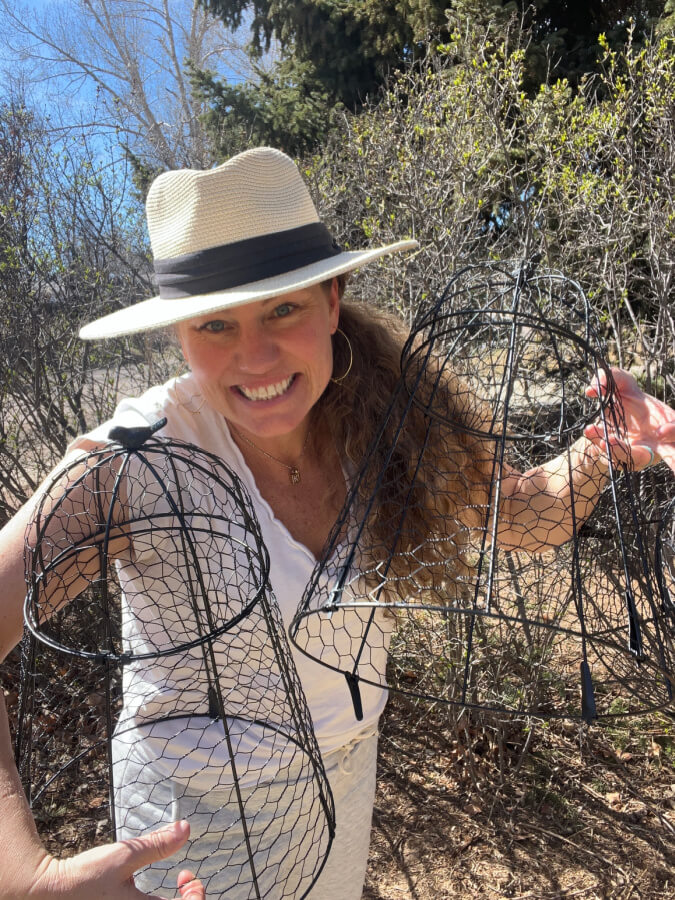
- Sometimes seedlings need protection from squirrels and other critters. I use these over my raised beds and these in my garden beds!
They’re just adjusting.
Do You Need to “Harden Off” Winter Sown Seedlings?
Here’s the good news. No. Because your seedlings have been outside this whole time, they’re already acclimated to the elements. This is one of the best parts of winter sowing.
Common Mistakes to Avoid
Let’s save you some heartache:
- Transplanting too early (especially warm-weather flowers like zinnias)
- Letting seedlings dry out during transplant
- Pulling too aggressively and damaging roots
- Forgetting where you planted everything
Final Thoughts
If you’ve made it this far, from seed to sprout, you are doing amazing. Transplanting might feel intimidating, but it’s one of those things that gets easier every single time. And before you know it, you’ll have a garden full of blooms that started in those little milk jugs.
Have your winter sown seeds started sprouting yet? And tell me, what are you most nervous about when it comes to transplanting?
More Winter Sowing Posts
- How to Winter Sow Seeds in Milk Jugs (Beginner Friendly Method)
- Winter Sowing Flowers in Ziplocks
- Winter Sowing Perennials: Cold-Hardy Flowers That Come Back Every Year
- 9 Easy Cold-Hardy Annuals to Try with Winter Sowing
- Winter Sowing Watering Tips


I’d love to have you hang out with me some more! Feel free to follow along with me on any of the platforms linked below.
LTK | Facebook | Instagram | Pinterest | Amazon



So helpful! I will be planting some today, yay!