

What to Do About Japanese Beetles in Your Garden
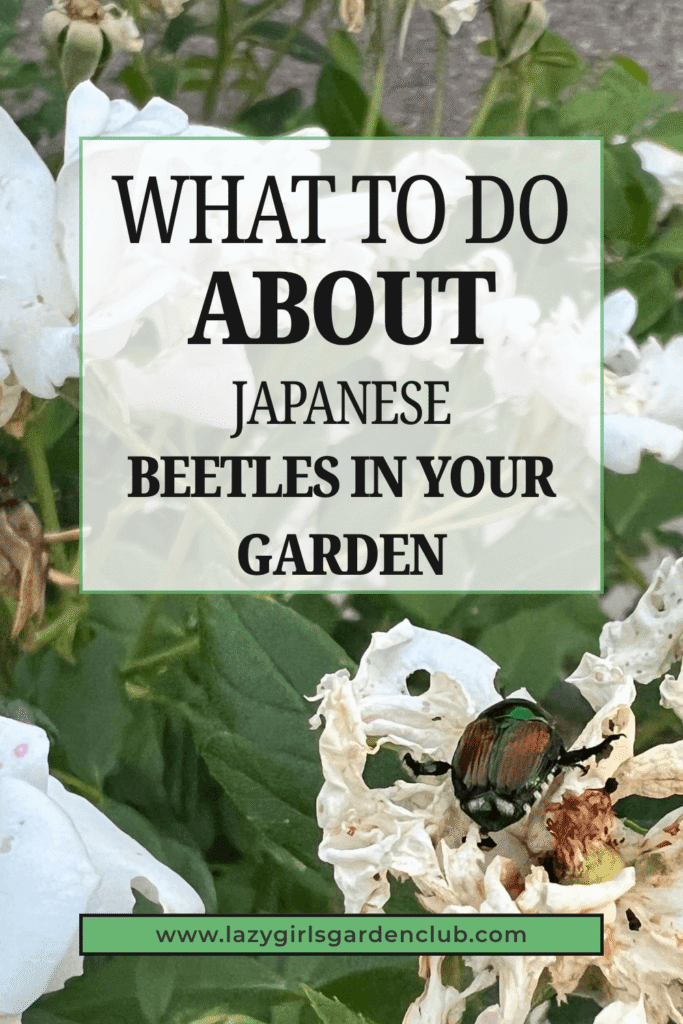
Japanese beetles are back in my garden, and let me just say… I honestly hate them.
If you have ever walked out to your garden and found your roses shredded, your zinnias chewed up, or your leaves looking like lace, then you probably know exactly what I’m talking about. These little metallic green beetles may look harmless, but they can do a lot of damage fast.
Sadly, I’ve been dealing with Japanese beetles for the past few years here in Colorado, and this year they showed up two weeks earlier than last year. Rude, honestly.
So today I’m sharing what Japanese beetles are, how to treat them, and what has worked for me in my own garden.
What Are Japanese Beetles?
Japanese beetles are invasive garden pests that feed on hundreds of different plants. In my garden, they especially love my zinnias and roses. Of course they do, right?
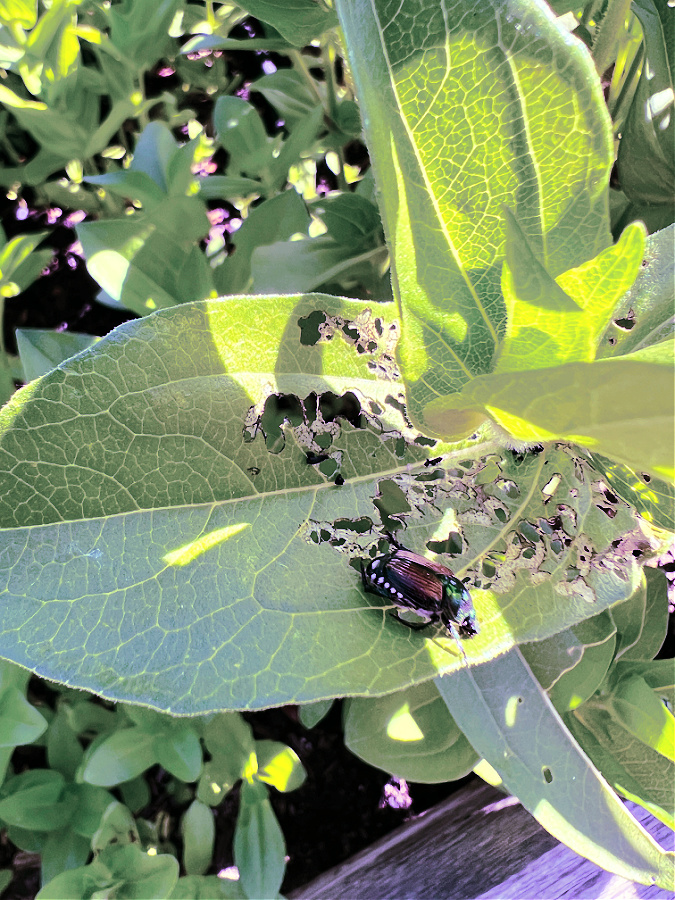
The adult beetles are easy to spot. They have shiny metallic green bodies with copper-colored wings and are usually found hanging out in groups on flowers, leaves, and buds.
They don’t just take a tiny nibble either. They chew flowers and “skeletonize” leaves, which means they eat the soft parts of the leaf and leave behind that lacy, shredded look.
So frustrating.
When Do Japanese Beetles Show Up?
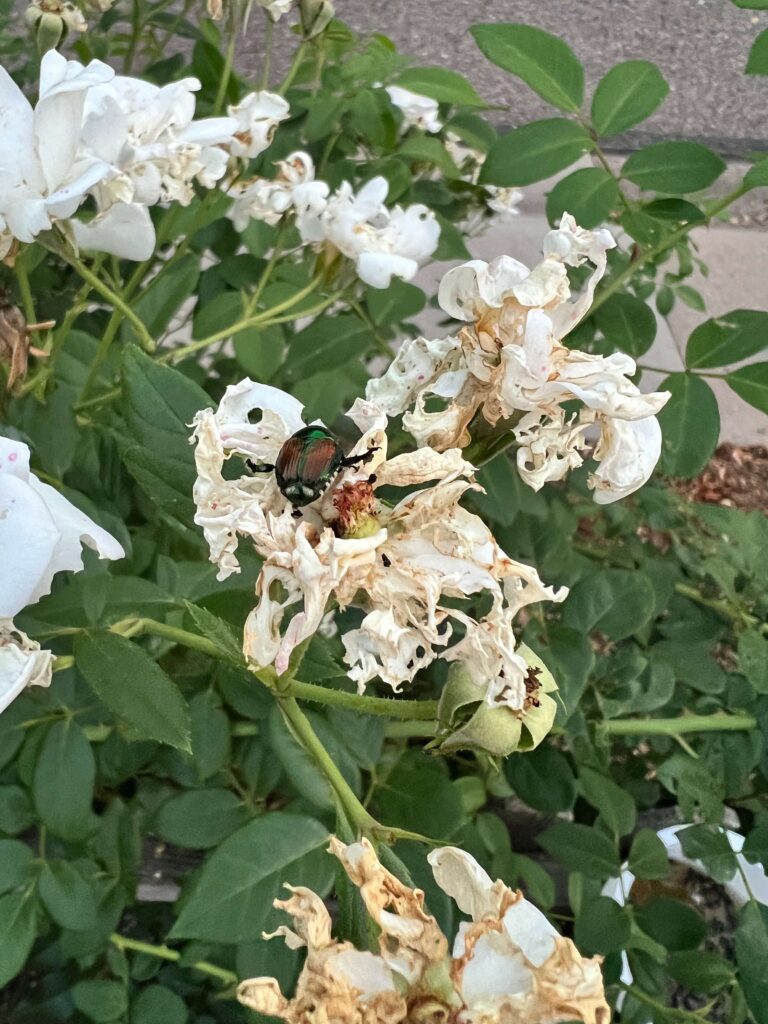
Japanese beetles usually show up in summer and can stick around for several weeks. In my garden, they have become part of my daily summer garden routine, whether I like it or not.
This year they arrived earlier than usual, so I’m checking my flowers every single day. And honestly, sometimes more than once a day.
Because if I don’t? My zinnias and roses pay the price.
The Best Way I Treat Japanese Beetles
My number one method is handpicking.
I know. It’s not glamorous. It’s not cute. But it works.
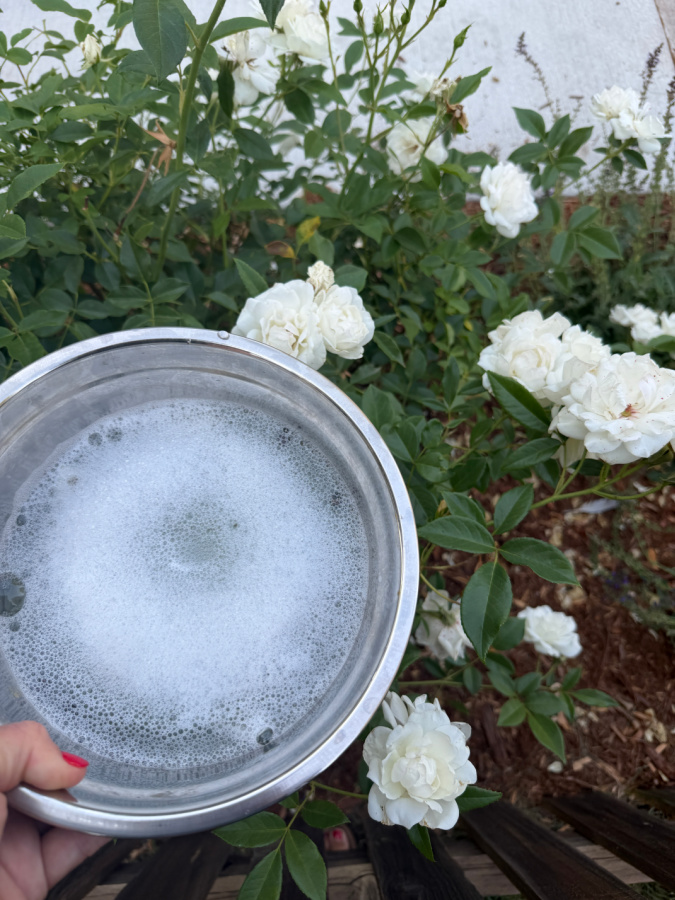
I fill a small bucket with water and a few drops of dish soap, put on gloves, and knock the beetles right into the soapy water. The soap keeps them from escaping.
The best time to do this is early in the morning or in the evening when they are slower and easier to catch. But honestly, I go out whenever I have time. Morning garden walks have basically turned into morning beetle hunts over here.
My husband has even been sweet enough to help me check for them, because last year it truly became a daily battle.
Other Ways to Help Control Japanese Beetles
1. Try a Hose Vacuum
A garden friend of mine used a vacuum to suck beetles right off her flowers, and I thought that was so smart. If you have a lot of beetles and don’t want to touch them, this might be worth trying.
2. Use Neem Oil Carefully
Neem oil can help deter Japanese beetles, but I personally avoid spraying the actual flowers because I don’t want to harm pollinators.
If you use neem oil, apply it in the evening when bees are less active and the sun isn’t beating down on your plants. Always follow the directions on the bottle.
3. Treat the Soil With Beneficial Nematodes
Beneficial nematodes are microscopic organisms that can help target Japanese beetle larvae in the soil. This is more of a long-term approach because it works on the grub stage, not the adult beetles currently eating your flowers.
If you use them, timing matters. They are typically applied to the soil when grubs are active.
4. Try Companion Planting
Some gardeners swear by planting garlic, chives, or catnip near plants they want to protect. One of my Instagram followers told me chives worked well for her, and I am very interested in anything that might help at this point.
You can also use trap crops like geraniums or marigolds to lure beetles away from your favorite flowers, then remove the beetles from those plants.
5. Be Careful With Beetle Bags
I have never tried Japanese beetle bags, but if this year is anything like last year, I might have to.
The tricky thing about beetle bags is that they attract beetles. So if you use one, place it far away from the plants you are trying to protect. You don’t want to invite them straight to your zinnias and roses like it’s some kind of beetle buffet.
Here is one type of Beetle bag and here is another type I see often in our neighborhood!
What Has Worked Best for Me
For now, my go-to routine is simple:
I handpick them daily, drop them into soapy water, and keep checking my zinnias and roses throughout the day when I can.
Colorado State University Extension also recommends handpicking as one of the best ways to control adult Japanese beetles, especially in smaller garden areas. They also note that Japanese beetle traps can catch a lot of beetles, but they have not been shown to actually reduce damage to nearby plants. So if you do try beetle bags, place them far away from the flowers and plants you are trying to protect.
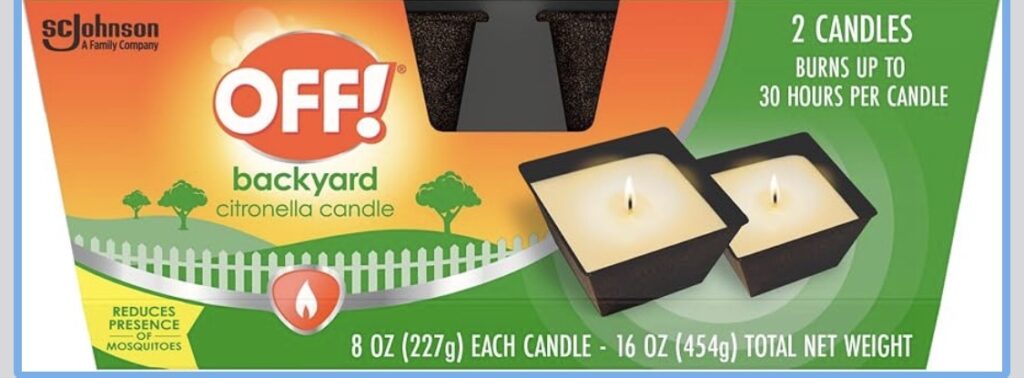
I’ve also been personally trying the OFF! citronella candle brand near my garden as one more experiment in my “please leave my flowers alone” summer survival plan. I can’t say this is an official Japanese beetle treatment, but I’m testing it in my own garden and will keep you posted. So far they are attracted to them and land in the candle and die. So I’ll take it!
The biggest thing I’ve learned is this: you have to stay on top of them. If you skip a day, they can do a lot of damage quickly.
What to Do About Japanese Beetles in Your Garden
Japanese beetles are one of the most frustrating garden pests I deal with. They are gross, persistent, and apparently have very expensive taste because they always go for my favorite flowers.
But don’t panic. Start with the simple stuff.
Grab a bucket of soapy water, put on your gloves, and go beetle hunting.
We are in this together, garden friends. I won’t let them win, and I hope this helps you save your flowers too.
Quick Japanese Beetle Tips
- Check your garden daily during Japanese beetle season.
- Look closely at roses, zinnias, dahlias, and other favorite flowers.
- Handpick beetles into soapy water.
- Go out early in the morning or evening when they are slower.
- Avoid leaving beetles in the garden.
- Use neem oil carefully and avoid spraying blooms.
- Place beetle bags far away from your favorite plants.
- Keep going. It really is a daily battle.

I’d love to have you hang out with me some more! Feel free to follow along with me on any of the platforms linked below.
LTK | Facebook | Instagram | Pinterest | Amazon



I have never heard of Japanese Beetles
Lucky you, they are horrible!
I agree they are the worst!!
I was having a really hard time with them on my zinnias this year. I put up two trap bags right beside my zinnia bed and oh my life it was a feast!! I was so horrified.
The next day I moved the bags to the direct opposite side of the yard and they worked a treat. The last couple days I’ve hand pluck 2-3 beetles a day from my biggest bed (so much better than the numbers before).
I also have a “natural spray” situation from the hardware store that I spray after ever water, so a combination solution but wow those bag traps have been my saving grace.
Thanks for sharing your experience with them!
Hi Hannah! So glad you were able to get some relief. Those bags are so gross but can definitely be helpful. I hope your flowers are beautiful this year!